IPTV for Publishers: How Live Sports Streaming Is Rewriting Brazil's Broadcast Playbook
If you work in publishing, media, or audience development, you already know the uncomfortable truth: live sports is the last thing keeping appointment viewing alive. News has been commoditized. Entertainment has been splintered across a dozen apps. But a live football match still pulls millions of people to the same screen at the same minute — and that collective attention is the most valuable currency in modern media.
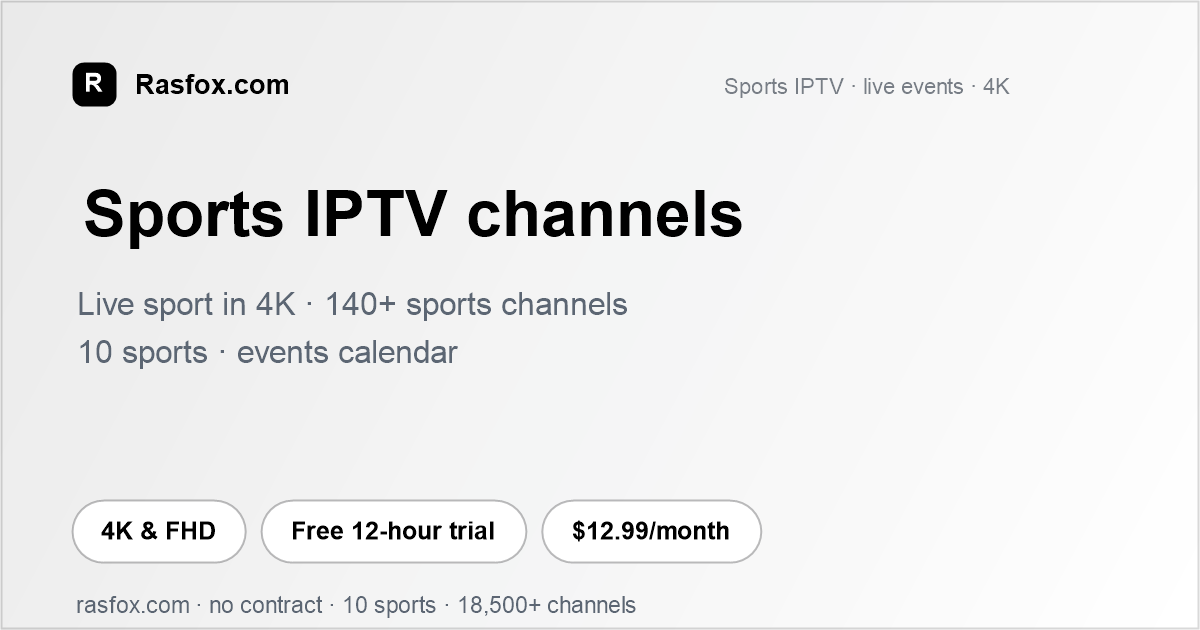
So here is the bridge between our world and the topic of this article: IPTV is not just a consumer gadget — it is a distribution model that publishers, editors, and content strategists can no longer afford to ignore. As audiences in Brazil and across Latin America abandon cable bundles, the question isn't whether they'll watch live sport. It's where they'll watch it, and which platforms capture that habit.
In this guide we'll look at IPTV through a publisher's lens: what it is, why it matters for audience retention, how the Brazilian market is behaving, what hardware you actually need, and how to stay on the right side of the law. Along the way, we'll show you why RasFox IPTV has built its entire identity around one thing: live sport, delivered without buffering.
What Is IPTV — And Why Should Media Professionals Care?
IPTV stands for Internet Protocol Television. Instead of arriving through a satellite dish or a coaxial cable, the signal travels over your regular internet connection. That single change has enormous consequences for anyone whose business depends on attention.
IPTV vs. Cable vs. OTT: The Practical Difference
- Traditional cable/satellite: fixed bundles, long contracts, hardware rentals, and channel lineups decided by a distant head office.
- OTT apps (Netflix-style): on-demand libraries, weak on live events, usually region-locked.
- IPTV: thousands of live channels plus on-demand libraries, delivered instantly, with no contract and no installation technician.
For a publisher, the important part is the middle of that list. Live is where the audience is. Live is where the second-screen conversation happens. Live is where the social spikes, the newsletter sign-ups, and the comment sections come from.
Why Live Sport Is the Last Moat
Breaking news gets copied within seconds. Match coverage cannot. A goal in the 93rd minute is a shared, unrepeatable event, and the platforms that own the delivery of that moment own the audience around it.
Takeaway: If your editorial strategy touches football, F1, UFC, or any live competition, the delivery layer matters as much as the content itself. That's precisely the gap a sports-focused IPTV service fills.
The Publisher's Edge: Turning Live Sport Into Audience and Revenue
Publishers don't need to become broadcasters to benefit from IPTV. They need to understand how their audience consumes live sport, and then build around that behaviour. Here are the three levers that matter most.
1. Audience Retention and Habit Formation
Live sport creates appointment behaviour — the rarest and most valuable habit in digital media. A reader who opens your match-day live blog every Sunday is worth far more than a visitor who arrives once from search. IPTV-powered viewing reinforces that rhythm: the same audience, the same time slot, the same platform, over and over.
2. Second-Screen and Companion Content
Nobody watches a big match in silence anymore. Phone in hand, they're checking line-ups, arguing in comments, reading tactical breakdowns at half-time. Publishers who position their content next to the stream — rather than competing with it — capture that traffic. A sports-first IPTV service makes that easy by simply keeping the match on the screen, stable and uninterrupted, while your content lives on the device beside it.
3. Monetization Without Rights Headaches
You don't need to buy broadcast rights to monetize a live sports audience. Editorial coverage, newsletters, podcasts, advertising around match schedules, and sponsorship of match-day hubs are all legitimate revenue streams built on top of someone else's stream. The audience is the asset; the delivery method simply determines whether they stay or drift away.
Takeaway: Publishers compete for attention, not for signal. A reliable live-sports viewing setup keeps your audience in the room where your content lives.
The IPTV Landscape in Brazil: A Market Built for Live Football
Brazil is one of the most fascinating streaming markets on earth, and not only because of its size. It's a country where football is close to a civic religion, where the internet is fast enough for 4K in most urban centres, and where cable subscriptions have been falling for years while streaming has exploded.
That combination — passion, bandwidth, and cord-cutting — is exactly the environment where IPTV thrives.
The Channels Brazilians Actually Search For
Any IPTV offering aimed at a Brazilian audience lives or dies by its sports lineup. The ones that matter most include:
- Globo — the historic home of Brazilian football broadcasts
- SporTV — dedicated sports coverage across multiple feeds
- Premiere — the Brasileirão pay-per-view powerhouse
- ESPN Brasil and Fox Sports — international leagues and analysis
- BandSports, Combate (UFC), and TNT Sports BR
On top of that, Brazilian viewers consistently ask for international competitions: the Brasileirão, the Libertadores, the Champions League, La Liga, the Premier League, plus F1 and UFC fight cards. In neighbouring Argentina and across the wider Latino market, the equivalents are TyC Sports, ESPN Premium, TNT Sports Argentina, Fox Sports and DirecTV Sports — and for lusophone viewers beyond Brazil, Sport TV, Eleven Sports, Benfica TV and DAZN Portugal. In Africa, SuperSport and ESPN Africa dominate. Globally, ESPN, DAZN, beIN Sports, Sky Sports and Eurosport remain the reference points.
Where RasFox Comes From — And Why It Matters
There's a story behind this that says a lot about the product. Radio Malena 89.1 FM, broadcasting from Venezuela 370 in Buenos Aires, built its reputation on tango, Argentine culture, and a deep tradition of live coverage. That same team has now moved into IPTV, serving lusophone and Latino audiences worldwide — and it brought its sports obsession with it.
The result is a service designed around sports channels and live sports events first, with everything else second. For a Brazilian audience that means:
- 12,000+ live channels, weighted heavily toward sport
- 40,000+ on-demand titles in 4K at 50FPS — crucial for smooth ball tracking
- 2 simultaneous screens, so one household can watch two matches at once
- No buffering during peak match windows, which is where cheap providers fall apart
- No contract, no installation, no equipment rental
- 24-hour free trial, so you can test it on a real match day
- Portuguese and Spanish support, 24 hours a day
If you've ever watched a stream freeze at the exact moment of a penalty, you understand why that last point about stability is the whole ballgame.
Hardware and Setup: The Publisher's Streaming Kit
One of the reasons IPTV has spread so fast is that the barrier to entry is almost zero. If you have a screen and an internet connection, you're most of the way there.
Devices That Work Well
- Smart TV (Samsung, LG, Android TV, Google TV) — the simplest option for a living-room setup
- Android TV boxes and Amazon Fire Stick — the most flexible, easiest to update
- Smartphones and tablets — ideal for second-screen and match-day companion viewing
- PC or Mac — useful for editors and researchers monitoring multiple feeds
- Apple TV — clean interface, good for 4K output
What Your Connection Needs
For reliable HD streaming, plan for around 10–15 Mbps. For 4K at 50 frames per second, aim for 25 Mbps or higher, and prefer a wired Ethernet connection over Wi-Fi whenever the device allows it. Latency and stability matter more than raw headline speed — a steady 30 Mbps beats an unstable 300 Mbps every single time.
Setting Up in Under Ten Minutes
- Choose your device and install the recommended player.
- Enter the credentials you receive after signing up.
- Load the channel list and EPG (electronic programme guide).
- Favourite your sports channels so match day is one click away.
That's it. If you'd rather not commit before you test, you can run a 24-hour free trial and check stability during a live Brasileirão or Champions League fixture — the only test that really counts.
Legitimate vs. Pirate IPTV: What Publishers Need to Know
Now the serious part, and it matters more to media professionals than to casual viewers.
There are two very different things hiding behind the word "IPTV":
- Legitimate IPTV services — licensed distributors, transparent pricing, real customer support, published terms, and identifiable ownership.
- Pirate IPTV operations — resold signals, no licensing, no support, no accountability, and a habit of vanishing overnight with your payment.
The practical risks of the second category are real: sudden shutdowns mid-match, malware bundled into sketchy apps, payment fraud, and — for anyone publishing content commercially — reputational exposure. If your brand points readers toward an unlicensed stream, you inherit part of the liability.
The publisher's checklist:
- Does the provider have a clear identity, contact path, and support channel?
- Is there a real free trial rather than a "no-refund" upfront demand?
- Are payment methods traceable and standard?
- Is support available in your audience's language?
This is exactly why we point readers toward the best IPTV service for live sport rather than the cheapest link in a forum thread. RasFox operates with visible identity, round-the-clock Portuguese and Spanish support, a genuine 24-hour trial, and no lock-in contract — the markers of a provider that intends to be around next season.
Takeaway: Price is the worst possible filter. Uptime, support, and accountability are what keep your audience watching — and keep your brand safe.
Frequently Asked Questions
What is IPTV, in simple terms?
IPTV (Internet Protocol Television) delivers live TV channels and on-demand content over your internet connection instead of satellite or cable. You watch on a smart TV, phone, tablet, PC, or streaming stick — with no dish, no installer, and no long-term contract.
Can I watch Brazilian football on IPTV?
Yes. A sports-focused IPTV service carries channels such as Globo, SporTV, Premiere, ESPN Brasil, BandSports, Combate and TNT Sports BR, plus international coverage of the Libertadores, Champions League, Premier League, La Liga, F1 and UFC.
Is IPTV legal?
IPTV as a technology is completely legal. Legality depends on the provider's licensing. Choose a service with a verifiable identity, transparent billing, and proper customer support — and avoid anonymous resellers offering implausible channel counts at implausible prices.
How much internet speed do I need for IPTV in 4K?
Around 10–15 Mbps is enough for stable HD. For 4K at 50FPS, aim for 25 Mbps or more, and use a wired connection where possible. Consistency matters more than peak speed.
How many devices can I use at once?
RasFox IPTV supports 2 simultaneous screens, which is ideal for a household juggling two matches at once — or for a media professional monitoring two feeds side by side.
Is there a free trial?
Yes. RasFox offers a 24-hour free trial with no contract required, so you can evaluate picture quality, channel depth, and stability during a genuine live match before committing.
The Bottom Line for Publishers and Media Professionals
The publishing industry has spent a decade chasing audience attention across an increasingly fragmented landscape. Live sport remains the one category that still gathers people in real time, at scale, with genuine emotional investment — and IPTV is now the delivery method most viewers are choosing.
For publishers, that means three things: understand the shift, position your content alongside the stream rather than against it, and never send your audience toward a provider that will let them down mid-match.
RasFox IPTV, born from the tango-and-football culture of Radio Malena 89.1 FM in Buenos Aires, is built with a total focus on sports: 12,000+ channels, 40,000+ VOD titles in 4K 50FPS, two screens, no buffering, no contract, and round-the-clock Portuguese and Spanish support.
If live sport is part of your audience strategy, start with the part you can control: the signal. Test RasFox IPTV with a 24-hour free trial on the next big match day — and see what uninterrupted football actually feels like.